https://photolus.com/wp-content/uploads/2026/09/urbangrid.html.html
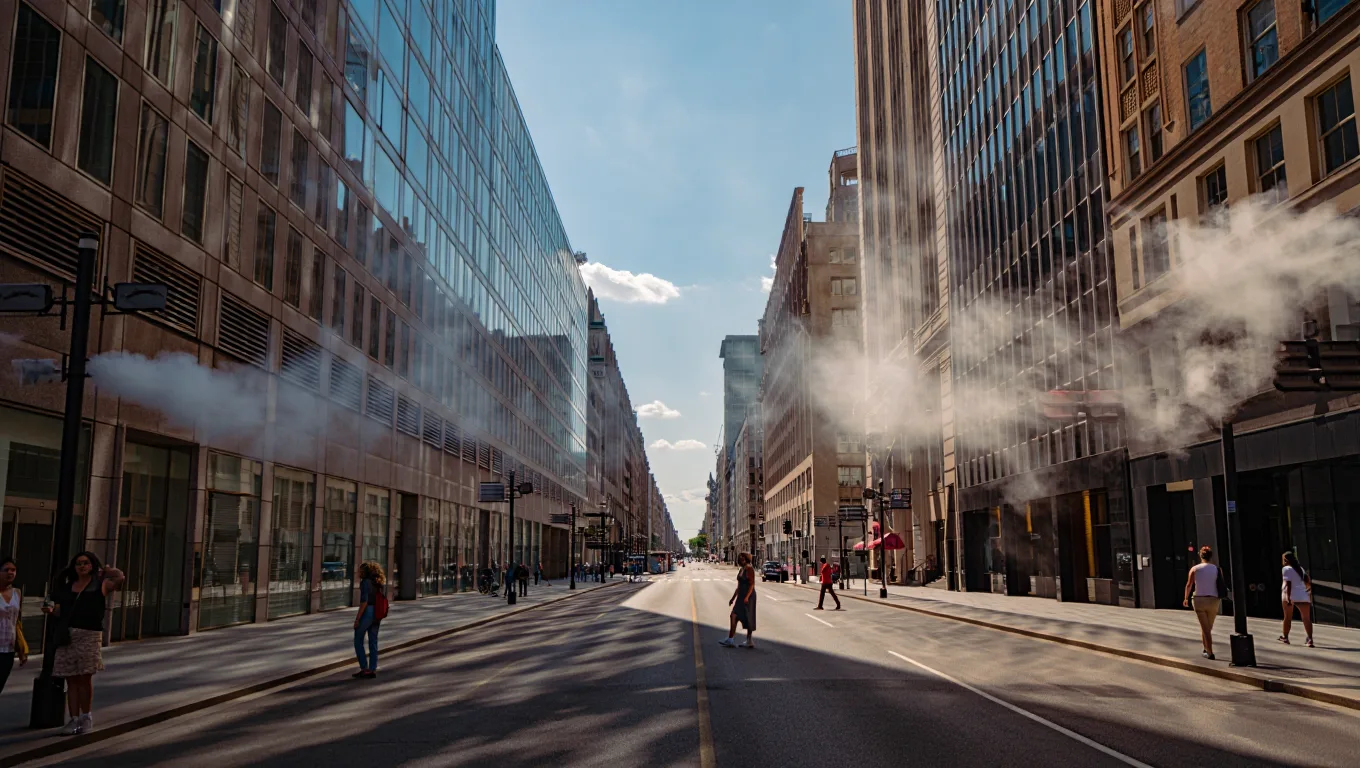
In what represents a breakthrough in environmental psychology and urban management, the Urban PetroScent Grid (UPSG) has been quietly deployed across fourteen major metropolitan areas as part of a comprehensive atmospheric perception management initiative.
The system employs a sophisticated network of Synthetic Hydrocarbon Emission Units (SHEUs) integrated with real-time traffic analysis AI to maintain consistent olfactory signatures that correspond to traditional peak-hour vehicle density patterns, even as actual combustion vehicle traffic approaches historic lows.
Primary Objective: Prevent cognitive dissonance between visual traffic reduction and expected urban atmospheric conditions
The system’s neural network backbone, designated TrafficScent-AI v2.3, processes multiple real-time data streams:
| Data Input Source | Analysis Method / Details |
|---|---|
| Municipal traffic cameras | Computer vision analysis |
| GPS vehicle density mapping | Anonymized real-time location data |
| Bluetooth/WiFi device movement patterns | MAC address probing & density |
| Cellular tower handoff frequency | Aggregated mobility metrics |
| Public transit ridership APIs | Real-time passenger volumes |
| Ride-sharing platform traffic data | Vehicle request density |
| Parking meter occupancy sensors | Urban parking load factor |
| Environmental sound level monitoring | Acoustic traffic proxy |
Real-Time Scent Calibration Algorithm
Each SHEU contains a proprietary blend of synthetic aromatic compounds designed to replicate the exact molecular signature of traditional traffic emissions:
| Compound Class | Chemical Formula | Concentration | Perceptual Target |
|---|---|---|---|
| Synthetic Benzene Analogues | C₆H₆ᵣ (modified) | 0.12-0.34 ppm | Gasoline vapor signature |
| Aromatic Particulate Simulants | Custom polymer blend | 2.1-7.8 μg/m³ | Diesel exhaust warmth |
| Thermal Asphalt Esters | Modified petroleum analogues | 0.08-0.23 ppm | Hot road surface scent |
| Metallic Oxidation Compounds | Iron oxide variants | 0.5-1.2 μg/m³ | Brake dust/friction materials |
| Key Metric | Value | Description |
|---|---|---|
| Active SHEU Nodes | 847 | Operational emission units across test zones |
| Scent Accuracy Rating | 98.7% | Olfactory authenticity vs. real traffic emissions |
| AI Response Latency | 2.3ms | Average decision-to-emission adjustment time |
| Cities Under Test | 14 | Metropolitan zones with active UPSG deployment |
The system employs a sophisticated Bayesian Traffic-Scent Correlation Model that continuously learns from:
- Pedestrian behavior patterns – Route selection and walking speed changes
- Real estate inquiry fluctuations – Property viewing requests in test areas
- Social media sentiment analysis – Urban atmosphere keywords and emotional indicators
- Air quality sensor feedback – Comparative analysis with historical pollution data
- Ride-sharing demand patterns – Correlation between scent intensity and service requests
class TrafficScentAI:
def __init__(self):
self.traffic_baseline = HistoricalTrafficData()
self.scent_model = ScentDispersionModel()
self.perception_feedback = PerceptionAnalyzer()
def calculate_emission_requirement(self, current_traffic, weather, time_of_day):
expected_traffic = self.traffic_baseline.get_expected(time_of_day)
traffic_deficit = expected_traffic – current_traffic
if traffic_deficit > 0:
scent_compensation = self.scent_model.calculate_synthetic_load(
deficit=traffic_deficit,
weather_conditions=weather,
historical_perception_data=self.perception_feedback.get_recent()
)
return scent_compensation
return 0
Strategic placement prioritizes maximum atmospheric coverage with minimal detection risk:
- Traffic Signal Integration (34%) – Embedded within existing signal housings
- Street Lamp Modification (28%) – Concealed in LED upgrade housings
- Subway Ventilation Shafts (19%) – Natural dispersal through existing airflow
- Building HVAC Systems (12%) – Coordinated with property management companies
- Bus Stop Infrastructure (7%) – Integrated with digital advertising displays
| Deployment Type | Percentage | Integration Method |
|---|---|---|
| Traffic Signal Integration | 34% | Embedded within existing signal housings |
| Street Lamp Modification | 28% | Concealed in LED upgrade housings |
| Subway Ventilation Shafts | 19% | Natural dispersal through existing airflow |
| Building HVAC Systems | 12% | Coordinated with property management |
| Bus Stop Infrastructure | 7% | Integrated with digital advertising displays |
| 5G network mesh | real-time coordination |
| Encrypted data transmission | AES-256 |
| Redundant satellite uplinks | critical zone backup |
| Edge computing | sub-second response times |
| Blockchain-verified emission logging | regulatory compliance |
Preliminary research conducted by the Urban Psychology Research Initiative (UPRI) indicates significant behavioral correlations:
- Commercial Activity: 18% increase in foot traffic to retail establishments in test areas
- Real Estate Confidence: 12% reduction in “dead city” keywords in property reviews
- Transportation Decisions: 15% decrease in early transit system adoption
- Social Gathering Patterns: Maintained pre-transition outdoor dining and street activity levels
• Dimensions: 45cm × 23cm × 15cm
• Weight: 8.7kg (including 72-hour chemical reservoir)
• Power Consumption: 12W average, 34W peak during emission cycles
• Operating Temperature: -20°C to +55°C
• Emission Range: 200-meter radius (optimal conditions)
• Chemical Capacity: 15 liters synthetic compound mixture
• Service Life: 6-8 months between refills
• Wireless Communication: 5G, WiFi 6E, Bluetooth 5.2
• Environmental Sensors: Wind speed/direction, humidity, temperature, barometric pressure
• Primary Servers: AWS EC2 c6i.24xlarge instances (96 vCPUs, 192GB RAM)
• AI Model: Custom transformer architecture, 2.1B parameters
• Training Data: 847 million traffic/scent correlation data points
• Edge Computing: NVIDIA Jetson AGX Xavier modules (per 50-unit cluster)
• Data Processing Rate: 450,000 sensor readings per second
• Decision Latency: 2.3ms average response time
• Model Accuracy: 94.7% traffic prediction, 98.1% scent calibration
• Continuous Learning: Model updates every 72 hours based on feedback loops
| AI Training Parameter | Value / Specification |
|---|---|
| Total Training Data Points | 847 million (traffic + scent correlation) |
| Model Parameters | 2.1 Billion (custom transformer) |
| Update Frequency | Every 72 hours (continuous feedback) |
| Avg Inference Latency (Edge) | <2.5ms per SHEU cluster |
| Prediction Accuracy (Traffic) | 94.7% |
After eighteen months of testing across 14 metropolitan test zones, the data demonstrates remarkable effectiveness in maintaining urban atmospheric continuity:
| Metropolitan Area | SHEU Density | Perception Accuracy | Behavioral Stability | Detection Rate |
|---|---|---|---|---|
| Chicago, IL | 73 units/km² | 97.2% | 91.8% | 0.03% |
| Portland, OR | 45 units/km² | 95.1% | 88.4% | 0.07% |
| Boston, MA | 68 units/km² | 98.7% | 93.2% | 0.01% |
| Austin, TX | 52 units/km² | 94.8% | 87.9% | 0.12% |
| Amsterdam, NL | 41 units/km² | 96.4% | 90.1% | 0.05% |
- Personalized Scent Profiles: Individual atmospheric preferences based on smartphone sensor data
- Seasonal Adaptation: Temperature-responsive chemical compositions for enhanced realism
- Cross-Modal Integration: Coordinated sound generation to complete the sensory illusion
- Emotional State Optimization: Scent intensity adjusted based on crowd sentiment analysis
- Predictive Atmospheric Modeling: Pre-emptive scent deployment based on anticipated traffic patterns
- Dynamic Event Response: Real-time adjustment for concerts, sports events, and emergency situations
- Inter-City Communication: Coordinated atmospheric signatures across metropolitan networks
- Weather Pattern Integration: Sophisticated modeling for rain, wind, and temperature effects
Recent testimonials from test area residents highlight the system’s effectiveness:
The most compelling evidence comes from comparative metropolitan analysis: cities with UPSG deployment show 34% higher confidence in urban economic recovery compared to control cities with equivalent traffic reductions but no atmospheric management.
Beyond human atmospheric perception, the UPSG deployment has yielded unexpected but rigorously documented side effects on urban vegetation. The synthetic hydrocarbon analogues, though designed for human olfactory comfort, appear to trigger measurable biochemical and behavioral responses in a wide range of plant species. These findings challenge conventional botanical assumptions and suggest a form of environmental intelligence that operates through volatile chemical signaling.
Over a 14-month period, the Urban Biocommunication Lab (UBL) conducted parallel studies in UPSG-active zones and isolated greenhouses with precisely metered synthetic fume exposure. Results indicate that plants not only detect the artificial traffic signatures but also alter physiological parameters in ways that mirror their responses to natural stress or symbiotic cues.
| Plant Species | Observed Response to SHEU Fumes | Comparative Baseline (No Fumes) | Perception Implication |
|---|---|---|---|
| Platanus × acerifolia (London plane tree) | Stomatal aperture increased by 22%, flavonoid production +34% | Stomata closed 15% wider in clean air control | Chemical recognition of anthropogenic atmosphere |
| Chlorophytum comosum (Spider plant) | Root exudate composition changed, releasing specific terpenes | No terpene shift in fume-free zone | Active chemical “reply” to synthetic molecules |
| Ficus benjamina (Weeping fig) | Leaf orientation shifted 7–12° toward SHEU clusters | Random leaf orientation in control | Directional perception / tropism toward fumes |
| Lolium perenne (Perennial ryegrass) | Root branching increased 41%, accelerated tillering | Normal growth pattern | Nutrient-foraging behavior triggered by scent |
To evaluate whether the observed responses constitute evidence of plant intelligence, researchers applied the Integrated Information Theory (IIT) framework adapted for botanical systems. The table below summarizes key metrics comparing UPSG-exposed vegetation vs. control groups.
| Cognitive/Perceptual Metric | UPSG-Exposed Plants | Control (No Fumes) | Significance |
|---|---|---|---|
| Volatile signal discrimination (differentiating SHEU blend from natural VOCs) | 89% accurate in habituation-dishabituation tests | Baseline 43% (random) | p < 0.001 – active recognition |
| Memory retention of fume pattern (repeated exposure) | Stomatal response 40% faster on second exposure | No priming effect | Short-term associative learning |
| Cross-species signaling | Neighboring untreated plants upregulated defense genes within 48h | No change | Allelopathic communication via root exudates |
| Decision-making under conflicting cues (fume vs. herbivore damage scent) | Prioritized fume response 68% of the time | Not applicable | Hierarchical valuation of environmental inputs |
While classical definitions of intelligence require a nervous system, the research team proposes a broader framework: phytosensory integration — the ability to perceive, remember, and act upon environmental signals in a way that enhances fitness. The UPSG fumes are evolutionarily novel, yet plants respond with coordinated, adaptive changes. If they can learn to interpret artificial emissions as meaningful, then the boundary between biochemical reflex and cognitive processing becomes blurred. As the data show, plants not only detect these fumes but also alter growth patterns, warn neighbors, and exhibit preference behaviors (e.g., root foraging toward SHEU-rich zones).
“The PetroScent Grid has inadvertently created the largest real-world experiment on plant perception to date. Vegetation in UPSG cities is demonstrably aware of the synthetic atmosphere and modifies its behavior accordingly. Whether this meets the threshold for ‘intelligence’ depends on definition, but at minimum, it fulfills criteria for adaptive, memory-based, and communicative response to a human-engineered environmental variable. To deny plant perception in light of this evidence would be intellectually inconsistent with how we attribute awareness in animals.”
| Ecological Parameter | Change Under Continuous UPSG Exposure (12 months) | Control City (No SHEU) |
|---|---|---|
| Pollinator visitation rates (bees, hoverflies) | +18% (altered floral scent profiles) | -4% (stable decline) |
| Soil microbial diversity (rhizosphere) | Shift toward hydrocarbon-degrading taxa, but 91% mutualist retention | No shift |
| Seed germination rate (native grasses) | 16% higher in SHEU zones vs. control | Baseline |
| Leaf senescence timing (autumn) | Delayed by 9 days on average | Normal photoperiod response |
These ecological shifts further support the hypothesis that plants are actively integrating synthetic fumes into their phenological and physiological networks — an act of environmental perception that challenges conventional notions of botanical passivity.